You are stranded within the wilderness with just one bar and a textual content that gained’t ship. You additionally occur to have 32 ft of aluminum foil. Why you will have it, I do not know — however you assume to your self: May I take advantage of this to spice up my cell sign someway?
I do not know why you had that aluminum foil out within the wilderness both. But it surely’s a strong concept rooted in actual science — a 2017 Dartmouth study proved that aluminum foil or different metallic surfaces can optimize wi-fi alerts. I’ve examined this concept earlier than, first by boosting after which blocking Wi-Fi signals utilizing aluminum foil. This time, it is my iPhone’s flip.
I attempted constructing a cell-signal booster out of aluminum foil, and this is what occurred.
What does aluminum foil must do with sign power?
The place the concept comes from
After experimenting with aluminum foil to each increase and disrupt my residence Wi-Fi sign, I began questioning if it might do the identical for my telephone. What sparked the concept was a childhood perception that tin-foil hats actually might block undesirable alerts. Whereas I am not a member of that committee, I used to be interested by Faraday cages — these conductive enclosures used to dam electromagnetic fields. If metallic surfaces can confine alerts, can additionally they management them? Enter the amplification speculation.
Aluminum is extremely conductive. When an electromagnetic wave hits its floor, free electrons contained in the steel begin shifting nearly immediately, producing a counter area that cancels the wave contained in the steel and bounces it again outward. In essence, it displays it or blocks the wave from shifting by it.
My DIY amplifier borrowed its form from a satellite tv for pc dish, which collects faint alerts from the house round and focuses them onto a receiver. The curved steel floor displays incoming radio waves towards a focus, the place they’re amplified. In my experiment, I needed the aluminum parabola to gather the radio waves and focus them in the direction of my telephone’s antenna.
How I measured my sign power
With Area Check Mode
You possibly can roughly estimate your sign power by discovering the ascending bars beside your community service (like AT&T or Verizon) and mobile community tech (like LTE or 5G), normally on the prime of your telephone’s display screen. There’s sometimes solely these 4 “bars” that provide you with a common concept of how robust your sign is. The extra bars, the stronger the sign. If there aren’t any bars in any respect, nicely, that is if you normally see somebody strolling round holding their helpless telephone to the sky in a determined hope to seize some sort of connection.
Nevertheless, there is a secret native characteristic on most telephones referred to as Field Test Mode (or a area check show) that permits you to see a extra detailed breakdown of your community’s data. Whereas there’s a wide range of acronyms and parameters that the on a regular basis individual would possibly scratch their head at, anybody can entry it by dialing *3001#12345#* into their telephone app. For the sake of this experiment, I used Area Check Mode (on iOS) to see how my sign power modified in actual time earlier than and after utilizing my selfmade aluminum foil amplifier.

The parameter I am most enthusiastic about is RSRP, or Reference Sign Acquired Energy. It is an indicator of sign power, and also you normally need to see it vary from -50 dBm to -120 dBm (decibel milliwatts). The upper the quantity, the stronger your sign — however remember that the numbers are unfavorable, so a sign sitting at -60 dBm is significantly better than one reporting at -102 dBm.
Whereas area check mode can be utilized to precisely measure your telephone’s sign power natively, it’s not the identical as a sign power app or a pace check app, like I’ve utilized in prior experiments to check my Wi-Fi router’s pace.
Now, there’s the matter of your sign high quality, which we will see by measuring RSRQ, or Reference Sign Acquired High quality. RSRQ normally sits between 0 dB and -20 dB (decibels). Once more, the nearer you’re to zero, the higher the sign high quality. You can even take a look at SINR (Sign-to-Interference-Ratio) because it’s one other good indicator of sign high quality.
Band (the frequency vary getting used) and Bandwidth (how vast the communication channel is) are additionally good indicators we’ll take a look at.
What occurred after I put my iPhone in a selfmade aluminum foil sign amplifier?
The method and the outcomes
To create the amplifier, I lower the tops and bottoms off three aluminum cans, flattened them out, and taped them collectively. I then coated the sheet with aluminum foil (shiny facet out) and smoothed it as finest I might. After slicing an iPhone-sized slot into an empty Coca-Cola bottle, I taped each ends to the foil sheet and bent the meeting right into a shallow parabola.
With no correct laboratory, it is troublesome to take away all creases and wrinkles from the aluminum foil, which makes this a lower than completely managed experiment. Nevertheless, I am performing it with real-life practicality in thoughts, so it is a check aligned with a real, real-world situation.
Now, I used to be able to carry out the sector check. My community service is Verizon, and I simply occur to sit down smack-dab in the course of three Verizon cell towers. Fortunately, I’ve a direct line of sight to the one in entrance of my window, which lets me intention my amplifier instantly at it for the experiment.
Utilizing the sector check instrument, I positioned part of my condominium the place my sign power was persistently the bottom. That is what I measured with and with out my selfmade amplifier:

With out the amplifier, my telephone linked to an n5 low-band 5G frequency with a slender 15 MHz bandwidth. The RSRP sat at –114 dBm, which is considered very poor. The RSRQ got here in at –13 dB (common high quality), and the SNR at –9 dB, which meant background noise was messing with usable sign.
Now, enter the amplifier. In the identical spot, my telephone locked onto an n77 mid-band 5G community with a 100 MHz bandwidth. The RSRP improved to –89 dBm — a few 25 dB achieve, pushing it into the “good” vary. The SNR flipped optimistic to +4.3 dB, and the RSRQ nudged up barely to –12 dB, which saved it within the common vary.
So, what occurred? Primarily based on concept, the foil did not truly ‘amplify’ my telephone’s sign. As a substitute, it redirected the present electromagnetic waves within the air in the direction of my telephone’s antenna. Since I formed the foil in a curved parabolic form (akin to a satellite tv for pc dish), if targeted what might’ve been scattered radio waves from that cell tower close by and gave my telephone the chance to leap as much as a sooner, larger capability band.
My first check labored surprisingly nicely, however I needed to know if the impact would maintain up someplace much less forgiving: the again stairwell of my condominium constructing. Sadly, I might barely even get a base learn in that spotty spot — my RSRP specifically saved leaping in every single place:

On the left was essentially the most constant base learn I might collect. On the best, I included 4 of essentially the most frequent reads I gathered in that again stairwell. Whereas at first, the aluminum foil appeared to barely enhance the RSRP normally, a slight motion of my arms threw that consequence out of whack. It was troublesome for me to seek out the angle that labored there, and after a couple of minutes I grew annoyed. Whereas it labored up in my condominium (with a transparent view of the cell tower, as nicely), it wasn’t doing squat in a spot the place I truly battle to get a sign in actual time.
I am not about to hold that contraption down 5 flights daily, however the frustration was actual — and in an precise emergency, it could be worse.
It is an ideal instance of how the surroundings issues in an experiment like this. Stairwells are a sign nightmare — product of concrete, metal, steel rails, and so on. The radio waves there have been already in all probability an echo chamber of alerts, and my amplifier in all probability solely added to the chaos and created extra reflections than had been there earlier than.
In a perfect surroundings (like my condominium unit), my DIY amplifier can work properly. However in something however, it places a highlight on how finicky and fragile the experiment is.
So, is aluminum foil a sensible sign booster?
No, it isn’t

If I discover myself on a barren desert street with nothing however a tumbleweed and two bars, this setup would possibly get me the sign to summon Triple-A. So long as my aluminum is completely unwrinkled, there aren’t conflicting alerts, and I have already got a strong likelihood of a textual content going by all by itself.
Aluminum foil would not make extra sign. Moderately, it simply tells present waves the place to go. Whereas it could work in ideally suited circumstances, it is fragile, unpredictable, and ridiculously straightforward to misalign — which might truly even harm your sign somewhat than enhance it. It positively is not a long-term repair to consistently nagging sign woes, both.
Should you’re on the lookout for a real sign booster, I would advocate an official device and even simply shifting to a greater location — even sending that textual content close to a window might enhance your probabilities of getting one or two extra bars normally.
Trending Merchandise
Wi-fi Keyboard and Mouse Combo, 2.4G Silent Cordless Keyboard Mouse Combo for Home windows Chrome Laptop computer Laptop PC Desktop, 106 Keys Full Measurement with Quantity Pad, 1600 DPI Optical Mouse (Black)

TP-Hyperlink AX5400 WiFi 6 Router (Archer AX73)- Twin Band Gigabit Wi-fi Web Router, Excessive-Pace ax Router for Streaming, Lengthy Vary Protection, 5 GHz
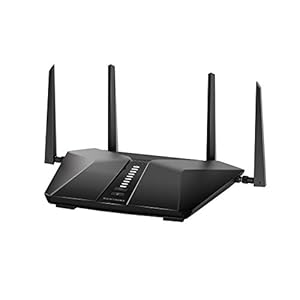
NETGEAR Nighthawk WiFi 6 Router (RAX43) – Security Features, 5-Stream Dual-Band Gigabit Router, AX4200 Wireless Speed (Up to 4.2 Gbps), Covers up to 2,500 sq.ft. and 25 Devices


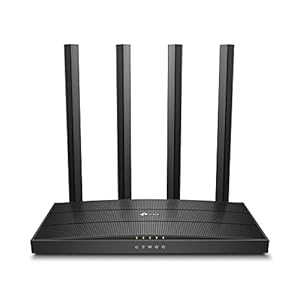
TP-Hyperlink AC1200 Gigabit WiFi Router (Archer A6) – Twin Band MU-MIMO Wi-fi Web Router, 4 x Antennas, OneMesh and AP mode, Lengthy Vary Protection