Google has officially released the most recent model of its flagship cell working system — Android 16 Quarterly Platform Launch 2 (QPR2) — onto suitable Pixel handsets, whereas additionally submitting its supply code to the Android Open Source Project (AOSP). When in comparison with Android’s final main software program replace, which launched a Material 3 Expressive design language overhaul, QPR2 is relatively much less flashy, although it is nonetheless crammed with a smattering of smaller software program tweaks and platform enhancements.
Amongst different issues, Android 16 QPR2 introduces an expanded darkish mode, customized app icon shapes, a notification summarizing software, enhanced HDR brightness controls, compelled icon colour theming, time zone change notifications, a 90:10 break up display screen multitasking mode, a toggle to cut back system blur results, assist for graphical desktop Linux apps, and, final however not least, lock display screen widgets.
If that ultimate new characteristic sounds surprisingly acquainted, that is as a result of it’s: lock display screen widgets on Android have a storied historical past, and, whereas new in a single sense of the phrase, they’re additionally equally an already-established a part of the Android ecosystem at massive, and one which Google itself is actually no stranger to.
Android 4.2 Jelly Bean lives on within the fashionable period
Google has carried out a 360 on the lock display screen widget idea
Whereas ‘inventory’ builds of latest Android are comparatively late to the celebration relating to supporting lock display screen widgets on the system degree, the irony is that Google was beforehand on the forefront of the lock display screen applet scene a whole decade in the past.
Google first developed and launched lock display screen widgets as a part of its Android 4.2 Jelly Bean launch in 2012. The characteristic, when enabled, allowed you to put a number of normal residence display screen widgets instantly onto your lock display screen, accessible through a paginated swiping gesture.
For one cause or one other, Google then ripped away lock display screen widget assist in 2014’s Android 5.0 Lollipop launch, maybe to present approach to the then-novel Materials Design visible refresh of the working system. The feature then returned in a first-party capability in a bespoke replace to the Pixel Tablet, which has now been adopted by a reboot of the characteristic on telephones as of this newest Android 16 QPR2 launch.
Google’s implementation is not excellent, nonetheless

Google’s rebuilding of a local lock display screen widget system follows the characteristic’s introduction throughout varied third-party Android skins like One UI and Nothing OS in recent times. Curiosity in lock display screen widgets has been spurred on by Apple’s 2022-era incorporation of the characteristic into iOS and iPadOS for the iPhone and the iPad, respectively.
Even on the PC aspect of the equation, Microsoft is in the process of rolling out a user-customizable lock display screen widget system of its personal for Windows 11, proving the characteristic has legs at a conceptual degree.
Whereas Google’s implementation is completely serviceable, it isn’t with out its issues.
With Android 16 QPR2, Google has opted to carry lock display screen widgets again in the same method to how they first appeared in Android 4.2 Jelly Bean. Widgets which can be usually designed for residence display screen use may be pinned to swipeable pages situated on to the fitting of the primary lock display screen interface, with a devoted UI for including, eradicating, and rearranging widgets.
Whereas Google’s implementation is completely serviceable, it isn’t with out its issues. For instance, grid dimension compatibility is restricted, which implies smaller widgets find yourself wanting clunky when positioned side-by-side with their wider counterparts. I might additionally argue that different Android skins present superior lock display screen widget experiences on the entire, with Nothing OS permitting widgets to seem instantly on the primary lock display screen web page, and One UI providing Apple-like miniature widgets that appear and feel purpose-built for the lock display screen surroundings.
The characteristic may be toggled on from inside Settings
As soon as you’ve got acquired the most recent over-the-air (OTA) software program in your suitable Android telephone, establishing lock display screen widgets is a reasonably easy course of. The characteristic is disabled by default, that means that it is an opt-in expertise. Moreover, there is a tag that denotes the characteristic as being in beta in the intervening time, and so the expertise itself could change or evolve over time.
Word that the next steps are particular to Google Pixel phones, in addition to to different Android handsets that undertake the Android Open Supply Undertaking in an unaltered vogue. Within the case of Samsung Galaxy’s One UI, OnePlus’ OxygenOS, Nothing’s Nothing OS, and different third-party skins, lock display screen widget implementations and their corresponding setup flows differ fairly significantly.
To get began with lock display screen widgets on Android, observe these steps:
- Make sure that you are operating Android 16 QPR2 or newer.
- Launch the Settings utility.
- Navigate to Show & contact > Lock show > Lock display screen > Widgets on lock display screen.
- From right here, flip the Widgets on lock display screen toggle to its on place.
An on-screen immediate will notify you of the potential threat concerned in utilizing lock display screen widgets, nevertheless it bears repeating: widget contents are seen whereas your machine is locked, and so it is best to keep away from pinning widgets that comprise doubtlessly delicate knowledge. After all, you will nonetheless need to confirm your id through a PIN, sample, or password as a way to launch apps utilizing their widgets, in addition to so as to add, take away, and reorder current lock display screen widgets.
As soon as you’ve got gone forward and toggled on the Widgets on lock display screen possibility, the characteristic instantly turns into accessible by swiping to the left out of your primary lock display screen. Merely maintain down anyplace on the display screen, after which authenticate, as a way to customise your structure, add pages, regulate on-screen widgets, and extra.
Trending Merchandise
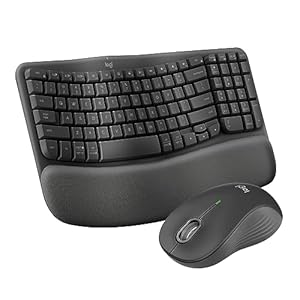
Wi-fi Keyboard and Mouse Combo, 2.4G Silent Cordless Keyboard Mouse Combo for Home windows Chrome Laptop computer Laptop PC Desktop, 106 Keys Full Measurement with Quantity Pad, 1600 DPI Optical Mouse (Black)

TP-Hyperlink AX5400 WiFi 6 Router (Archer AX73)- Twin Band Gigabit Wi-fi Web Router, Excessive-Pace ax Router for Streaming, Lengthy Vary Protection, 5 GHz
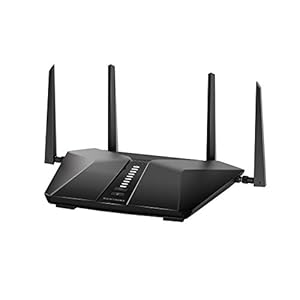
NETGEAR Nighthawk WiFi 6 Router (RAX43) – Security Features, 5-Stream Dual-Band Gigabit Router, AX4200 Wireless Speed (Up to 4.2 Gbps), Covers up to 2,500 sq.ft. and 25 Devices


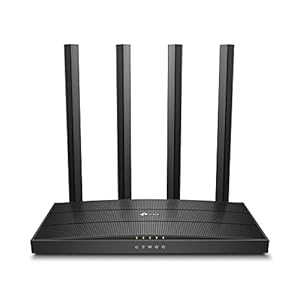
TP-Hyperlink AC1200 Gigabit WiFi Router (Archer A6) – Twin Band MU-MIMO Wi-fi Web Router, 4 x Antennas, OneMesh and AP mode, Lengthy Vary Protection